Inside a Solar EPC Project: How Engineering, Procurement, and Construction Work Together for Efficient Solar Plants - Best Solar Panel Company in Surat, Gujarat | Anany Urja Pvt. Ltd.

☀️ Gujarat’s Leading Solar Installers – Book Your Free Consultation Today!

Inside a Solar EPC Project: How Engineering, Procurement, and Construction Work Together for Efficient Solar Plants

Inside a Solar EPC Project How Engineering, Procurement, and Construction Work Together for Efficient Solar Plants-1

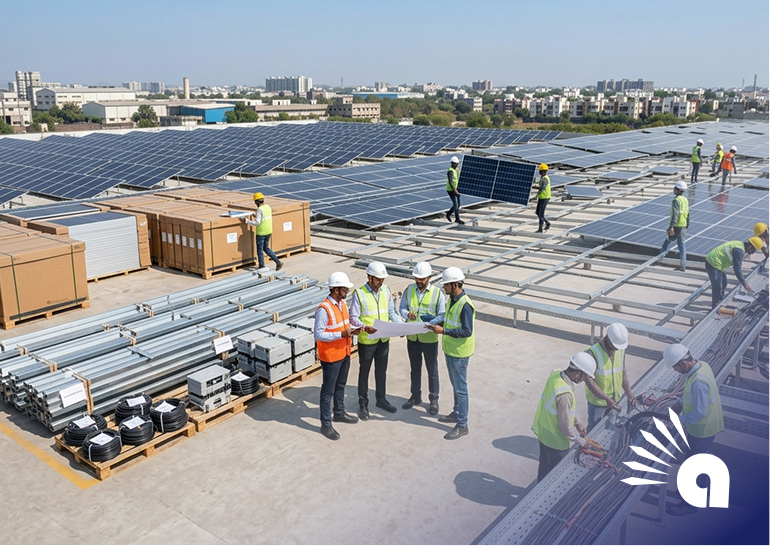
A solar power plant does not come together by simply placing panels on a rooftop or a field. Behind every functional, high-performing solar installation is a structured process that involves technical planning, material sourcing, and precise on-site execution. This end-to-end process is what the solar industry refers to as EPC – Engineering, Procurement, and Construction.

For residential, commercial, or industrial solar projects, the EPC model provides a single, accountable framework that takes a project from feasibility to full operation. Understanding how each phase works – and how they connect – is essential for anyone involved in solar plant development.

What Is Solar EPC?

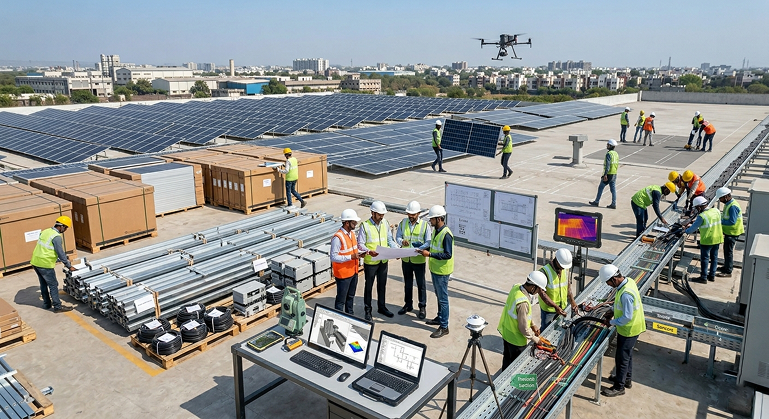
Solar EPC is a project delivery model in which one company or team is responsible for the complete development of a solar plant. Engineering covers design, planning, and technical specifications. Procurement involves sourcing all materials and equipment. Construction refers to the physical installation, civil work, and electrical integration carried out on-site.

What makes EPC distinct is integration. The three phases are not independent activities handed off sequentially – they are coordinated continuously, with decisions in one phase directly influencing the others.

Engineering Phase

The engineering phase lays the technical foundation for everything that follows.

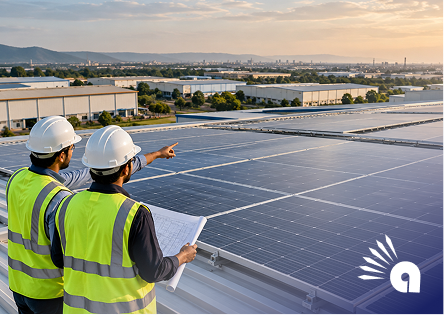
Site assessment is the starting point. Engineers evaluate roof type or land area, orientation, structural load capacity, shading from surrounding structures, and local solar irradiance levels. For rooftop projects, the building’s structural integrity is confirmed before any design work proceeds.

System design determines the optimal panel layout, string configuration, inverter sizing, cable routing, and earthing arrangement – all aimed at maximising energy yield while ensuring safety and compliance.

Technical planning produces detailed drawings, single-line diagrams, and equipment specifications. These documents guide both the procurement team and the on-site construction crew, ensuring everyone works from the same technical baseline.

Procurement Phase

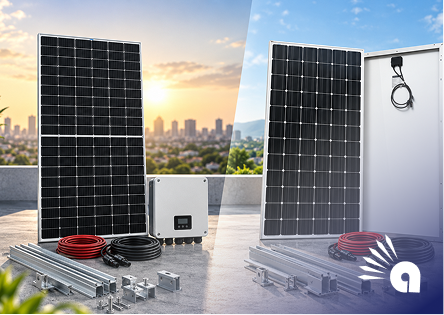
Once the engineering design is finalised, procurement begins. Key items typically include solar PV modules, inverters, mounting structures, DC and AC cables, junction boxes, switchgear, earthing materials, and monitoring equipment.

The quality and compatibility of each component matter directly to plant performance. A mismatch between panel specifications and inverter input parameters, for example, can reduce system efficiency or trigger protection faults. Procurement teams must ensure every component meets the technical specifications defined during engineering and that delivery timelines align with the construction schedule.

Vendor reliability is equally important. Delays in material delivery are one of the most common causes of project overruns. Experienced procurement teams build contingency into their sourcing plans and maintain relationships with dependable suppliers to reduce this risk.

Construction Phase

Construction is the most visible phase, but its quality depends entirely on how well engineering and procurement were executed.

Civil work comes first – foundation preparation for ground-mounted systems, structural reinforcement for rooftop installations, and cable tray routing. Mounting structures are then positioned and secured as per the approved layout, followed by panel installation.

Electrical work involves connecting modules into strings, routing DC cables to the inverter, and completing the AC connection to the grid metering point. Each connection is tested before the circuit is energised.

Quality control is applied throughout – torque checks on fasteners, insulation resistance testing, string voltage measurements, and earth continuity verification before commissioning. Safety protocols govern every stage: fall protection for rooftop crews, lockout procedures for electrical work, and fire safety requirements for inverter areas.

How the Three Phases Work Together

The three phases are interdependent in ways that are easy to underestimate. A design change affects which components need to be procured. A material delivery delay affects the construction schedule. A site-level finding during construction may require engineering to revise cable routing or inverter placement.

Effective EPC execution depends on continuous coordination between all three teams. Project managers track dependencies and make real-time decisions to keep the project on schedule without compromising technical quality. When this integration works well, the result is a plant built exactly as designed, using compatible materials, delivered within a timeline that keeps costs predictable.

Common Challenges in EPC Projects

A professional EPC company brings together the technical expertise, project management capability, and supply chain relationships needed to execute a solar project from concept to commissioning.

Anany Urja, a solar EPC company based in Surat, Gujarat, operates across residential, commercial, and industrial solar segments. Their work covers the full EPC scope – from initial site evaluation and system design through to installation, electrical integration, and plant handover. Their experience across varied site conditions and project scales in Gujarat reflects the practical execution capability that EPC projects demand. A capable EPC company delivers not just a system that works at commissioning, but a plant designed to perform consistently over a 25-30 year operational life.

Role of a Professional EPC Company

A professional EPC company brings together the technical expertise, project management capability, and supply chain relationships needed to execute a solar project from concept to commissioning.

Anany Urja, a solar EPC company based in Surat, Gujarat, operates across residential, commercial, and industrial solar segments. Their work covers the full EPC scope – from initial site evaluation and system design through to installation, electrical integration, and plant handover. Their experience across varied site conditions and project scales in Gujarat reflects the practical execution capability that EPC projects demand. A capable EPC company delivers not just a system that works at commissioning, but a plant designed to perform consistently over a 25-30 year operational life.

Conclusion

A solar plant is only as reliable as the process that built it. The EPC model, when executed with discipline across all three phases, ensures that engineering decisions translate accurately into physical installations, materials meet design requirements, and construction quality holds up over time. For any project where long-term performance matters, the quality of EPC execution is the defining variable.

Frequently Asked Questions

What is a Solar EPC project?

A Solar EPC project is one in which a single company takes responsibility for all three phases of solar plant development: Engineering (design and planning), Procurement (sourcing of materials and equipment), and Construction (on-site installation and commissioning). It provides end-to-end accountability for the entire project.

What are the stages of EPC?

The three stages are Engineering, Procurement, and Construction. Engineering covers site assessment, system design, and technical documentation. Procurement involves sourcing panels, inverters, structures, and cables. Construction includes civil work, mounting installation, electrical integration, and quality testing before commissioning.

Why is EPC important in solar plants?

EPC ensures that design, materials, and installation are coordinated and held to a consistent quality standard. Without structured EPC execution, gaps between design intent and on-site reality lead to underperforming systems, costly rework, and reliability issues over the plant’s operational life.

What does a Solar EPC company do?

A Solar EPC company manages the entire project lifecycle – site assessment, engineering design, equipment procurement, civil and electrical work, quality checks, and commissioning. The client has a single point of accountability for all project outcomes.

How long does EPC execution take?

A residential rooftop of 5-20 kWp is typically completed in one to two weeks once materials are on-site. A commercial or industrial project of 100 kWp to 1 MWp usually requires four to twelve weeks. Large ground-mounted projects take considerably longer and are planned in phases.

What causes EPC project delays?

The most frequent causes are procurement delays due to supplier or logistics issues, site complications discovered during civil work, and coordination gaps between engineering and construction teams. Thorough pre-construction surveys and advance procurement planning are the most effective mitigations.

How do I evaluate an EPC contractor's quality?

Key indicators include experience across different project types, in-house engineering capability, procurement process transparency, and on-site quality control rigor. A track record of completed projects with documented performance data is the most reliable measure of EPC execution quality.

Inquiry Now