📢 The DCR (Domestic Content Requirement) Policy implementation has been extended until 31st December 2026 for the solar sector. 🌞 Claim Up to ₹78,000 Government Subsidy Before 31 March 2027 – Switch to Solar with Anany Urja.     📢 The DCR (Domestic Content Requirement) Policy implementation has been extended until 31st December 2026 for the solar sector. 🌞 Claim Up to ₹78,000 Government Subsidy Before 31 March 2027 – Switch to Solar with Anany Urja.    
Planning a Warehouse? Don't Make These Solar Design Mistakes.

Planning a Warehouse not Make These Solar Design Mistakes

A warehouse looks like the perfect candidate for solar. It has a big roof, usually little shade and a steady electricity bill. That is exactly why design shortcuts creep in. A system sized by guesswork or rushed on site can underperform for 25 years. Here are the mistakes worth avoiding before you sign anything.

Skipping the Roof Check

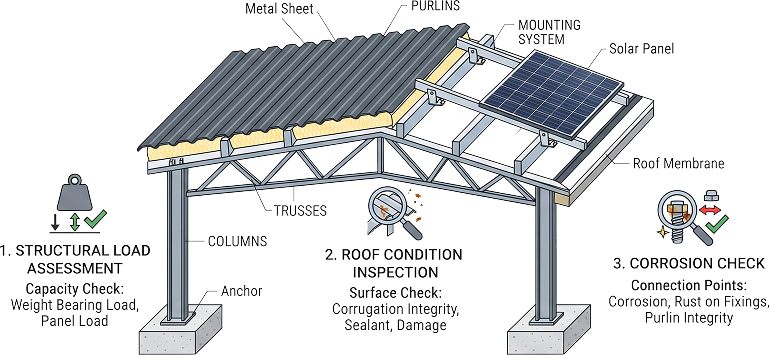
Panels will sit on that roof for 25 years or more, so its condition matters before anything else. Many warehouses have metal sheet roofs, and some are already ageing. Check the purlins, sheet thickness, corrosion and leaks, and confirm the structure can carry the extra load. Panels add weight and fixings add penetrations, so waterproofing around them needs attention. If the roof needs replacing in eight years, you will pay to remove and refit the whole plant.

Sizing by Roof Area Instead of Load

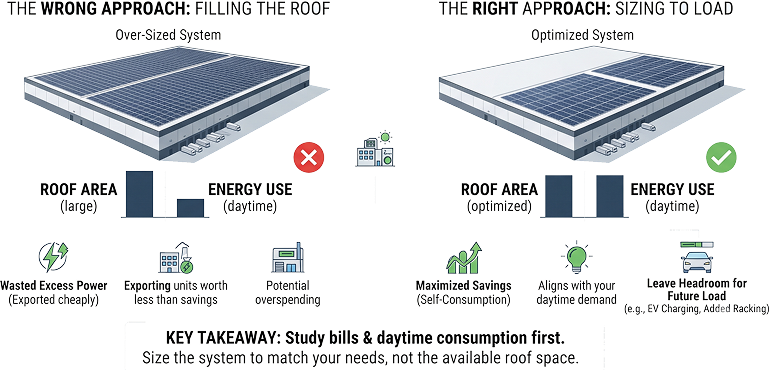
A big roof tempts people to fill every square metre. But the right size depends on how much power the warehouse actually uses during the day. Lighting, forklift charging, cooling and office loads vary a lot between sites. Oversize the plant and you may export units worth less than the ones you save. Study your bills and daytime consumption first, then size the system to match. Leave some headroom in the design too if you expect more load later, such as added racking or EV charging.

Sizing by Roof Area Instead of Load

Ignoring Shade and Roof Clutter

Skylights, ventilators, water tanks, parapet walls and rooftop units cast shadows that are easy to miss on a quick visit. Even partial shading on one string can drag down the output of the whole string. On flat roofs, row spacing matters too, because tilted panels can shade the row behind them. A proper shadow study and layout should come before the order for panels.

Overlooking Fire Safety and Access

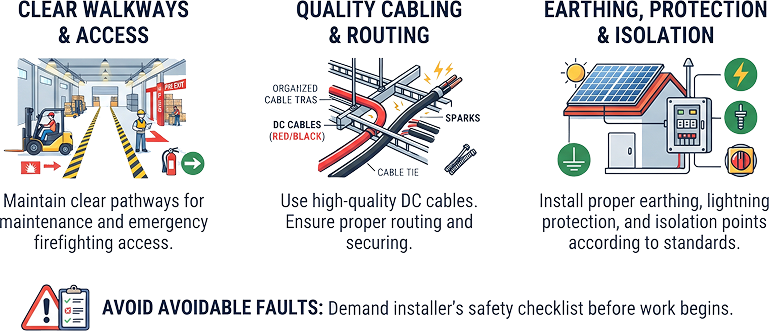
Warehouses hold stock that burns, so safety cannot be an afterthought. Leave clear walkways and access for maintenance and firefighting, use quality DC cables with proper routing, and install earthing, lightning protection and isolation points as per standards. Cheap cabling and loose connectors are common sources of avoidable faults. Ask your installer to show the safety checklist before work begins.

Forgetting Dust, Cleaning and Monitoring

Warehouses often sit in industrial belts where dust settles fast, and dirty panels lose output quietly. Plan for water points, safe cleaning access and a maintenance schedule from day one. Without monitoring, a failed string can go unnoticed for weeks, so real-time tracking is worth having.

How Anany Urja Designs Warehouse Solar

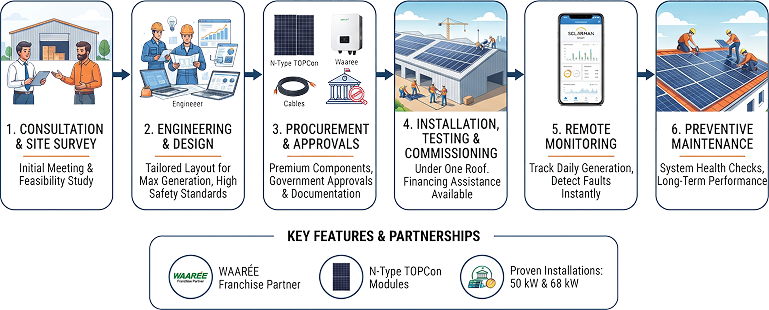
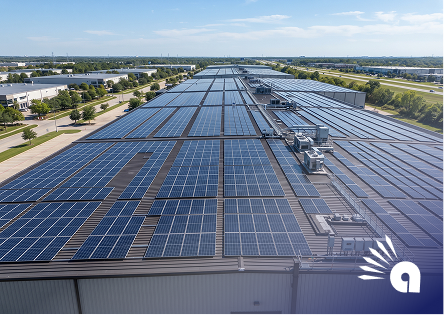
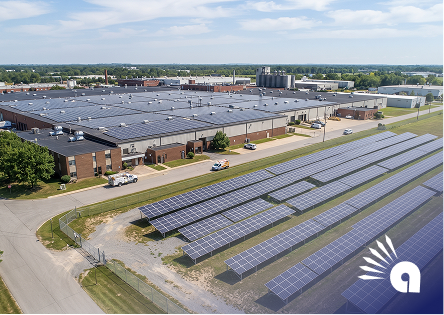
Anany Urja, a trusted solar EPC company in Gujarat, designs rooftop systems for warehouses with a structured EPC process. The process starts with consultation and a site survey and feasibility study, then moves to engineering and design planned by experienced engineers for maximum generation and high safety standards. As a commercial solar EPC company, it manages procurement of premium components, government approvals and documentation, installation, testing and commissioning under one roof, with financing assistance for business customers who want it. Remote monitoring through SOLARMAN Smart tracks daily generation and detects faults instantly, and preventive maintenance with system health checks supports long-term performance. Anany Urja also supplies N-Type TOPCon modules as an official Waaree franchise partner. Its rooftop work includes the 50 kW and 68 kW installations.

How Anany Urja Designs Warehouse Solar

Conclusion

A warehouse solar plant is a 25-year decision, and most mistakes are cheap to avoid at the design stage and expensive to fix later. Check the roof, size to your load, study the shade, plan for safety and keep the panels clean and monitored. To plan your warehouse project properly, talk to the Anany Urja team about a site survey.

Frequently Asked Questions

Does Anany Urja install solar on warehouses?

Yes. It designs customized rooftop systems for commercial buildings, industrial facilities and warehouses.

Does Anany Urja do a site survey before design?

Yes. Consultation and a site survey with a feasibility study come first, followed by engineering and design.

Who handles government approvals?

Anany Urja manages approvals and documentation, and can guide you on financing options.

Can I track my warehouse plant remotely?

Yes. SOLARMAN Smart shows daily generation and plant performance and detects faults instantly.

Does Anany Urja provide O&M after installation?

Yes. It offers preventive maintenance, performance monitoring, system health checks and technical support.

Which solar modules does Anany Urja offer?

N-Type TOPCon modules, as an official Waaree franchise partner.

Is Anany Urja a solar company in Gujarat?`

Yes. Anany Urja Pvt. Ltd. is a Gujarat-based solar EPC company serving residential, commercial, industrial and utility-scale clients.

Inquiry Now