Why Site Survey Is Important for Solar Installation - And Why Skipping It Is a Costly Mistake - Best Solar Panel Company in Surat, Gujarat | Anany Urja Pvt. Ltd.
📢 Starting 1st June, the DCR (Domestic Content Requirement) Policy will be implemented for the solar sector, promoting the use of Made-in-India solar cells and modules.

Why Site Survey Is Important for Solar Installation - And Why Skipping It Is a Costly Mistake

Why Site Survey Is Important for Solar Installation - And Why Skipping It Is a Costly Mistake-main

Most people planning a solar installation spend time comparing panel brands, checking subsidies, and getting price quotes. All useful. But there’s one step that often gets rushed or skipped – and it’s the one that determines whether your system actually performs the way it should.

That step is the site survey.

Skip it, and you could end up with a system that’s the wrong size, installed at the wrong angle, on a roof that wasn’t ready – quietly underperforming for years while you wonder why your bills haven’t dropped as promised.

What Is a Solar Site Survey?

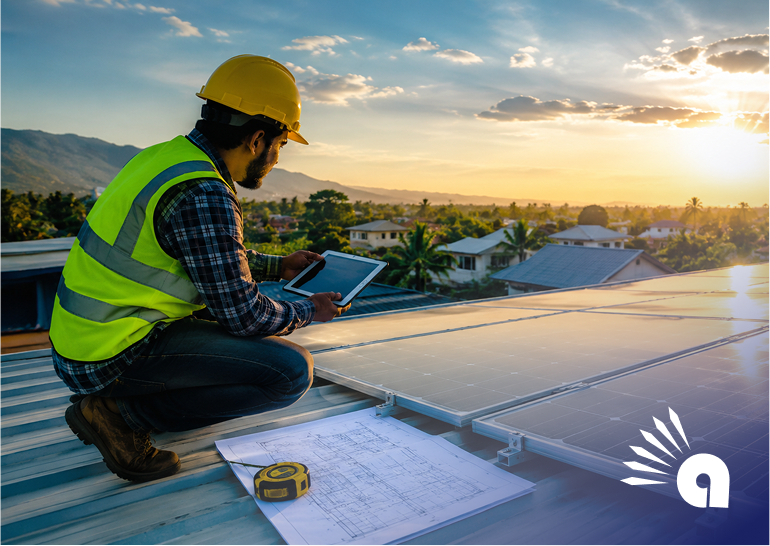
A solar site survey is an on-site assessment of your property before installation begins. A qualified engineer visits, inspects the rooftop, analyses the surroundings, evaluates your electrical setup, and gathers the data needed to design a system that genuinely fits your situation.

It’s not a formality. It’s the foundation of everything that comes after.

Why It Matters More Than People Realise

Every property is different. A rooftop in Surat faces different dust levels, sun angles, and structural conditions than one in Shimla or Chennai. A system designed without seeing the site is essentially a guess.

A proper survey removes that guesswork. It ensures your system is built for your actual conditions – not a generic template.

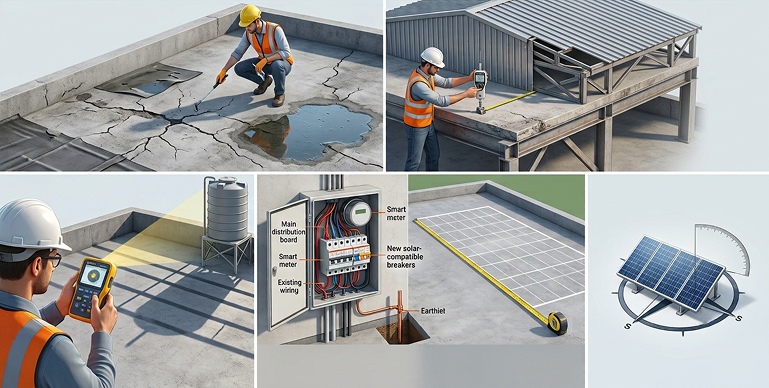
What Gets Checked During a Site Survey

Rooftop condition:

The roof is inspected for cracks, waterproofing issues, or wear. Installing heavy panels on a weak surface is a risk no one should take.

Shadow analysis:

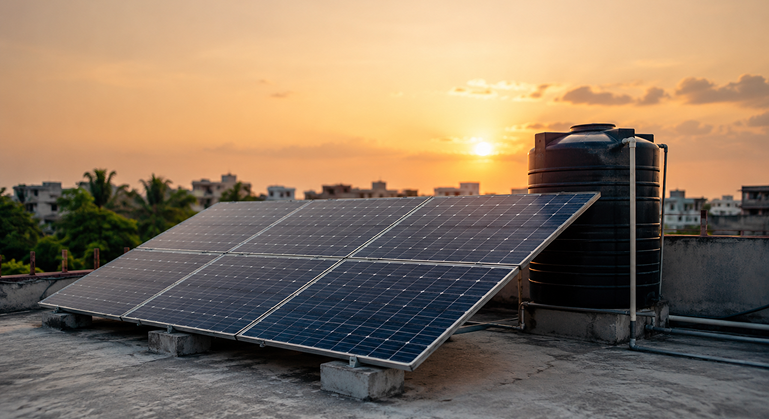
Partial shading from a water tank, parapet wall, or neighbouring building can significantly reduce output. Engineers assess shadow patterns across different times and seasons to find the best panel placement.

Direction and tilt:

In India, panels ideally face south at an angle matching the site’s latitude. Getting this wrong means losing generation every single day for the system’s entire life.

Structural strength:

Rooftops must bear the weight of panels, mounting hardware, and wind load. This is especially critical for older buildings or industrial sheds with metal roofing.

Electrical setup:

Existing wiring, meter type, distribution board capacity, and earthing are evaluated for compatibility with the solar system.

Available space:

Measure usable shadow-free area to calculate how many panels can realistically be installed – which directly determines system capacity and output.

What Happens Without a Proper Survey

Imagine installing a 10 kW system on a roof that can safely support only 6 kW. Or placing panels where a water tank casts shadow for hours each afternoon. Or discovering post-installation that your electrical panel needs a complete upgrade.

These aren’t rare cases. They happen regularly when installation is rushed without proper assessment – leaving owners with systems that underperform or need expensive corrections.

Site Survey, System Sizing, and Your ROI

Your return on investment depends entirely on your system generating what it was designed to generate. And that’s only possible when the survey data is accurate.

A properly surveyed site gives engineers what they need to calculate the right capacity, panel layout, inverter size, and realistic generation figures. Get the survey wrong, and every number built on it is wrong too. Your payback period, your savings estimate, your bill reduction – all of it shifts.

Residential vs Commercial - Same Importance, Different Scale

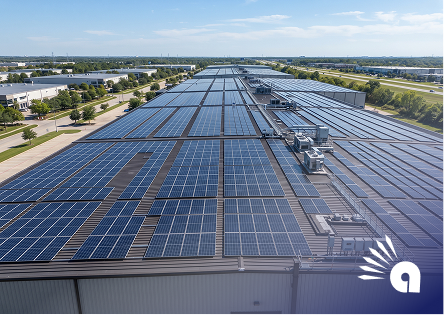
For homeowners, a survey takes one to two hours and covers the essentials thoroughly. For factories, warehouses, or commercial buildings, it’s more involved – larger roof areas, higher load requirements, three-phase electrical systems, and sometimes structural engineering input.

Different scale, same principle: understand the site before designing the system.

Why Professional Assessment Matters

A photograph sent to an installer is not a site survey. Real assessment requires trained engineers, proper instruments, and the experience to interpret what they find accurately.

This is central to how Anany Urja approaches every project. Before any design or proposal is prepared, the site is assessed properly – because a system built on accurate ground-level data is one that genuinely delivers on its promises.

Conclusion

Solar is a long-term investment. Done right, it pays for itself and keeps saving money for 25 years. Done without a proper site survey, it starts with problems that compound quietly over time.

Before you approve any design or sign anything, make sure someone has physically visited your site, assessed it thoroughly, and built your system around real findings – not assumptions. That one step makes all the difference.

Frequently Asked Questions

Is a site survey free?

Yes, most professional solar companies including Anany Urja offer site surveys at no extra charge as part of the pre-installation process.

How long does a survey take?

Residential surveys take one to two hours. Commercial or industrial properties may take half a day depending on size and complexity.

Can I do the assessment myself?

Basic observations help, but proper surveys need trained engineers with instruments for shadow analysis, structural checks, and electrical evaluation. Self-assessments miss too much.

My roof has partial shading - is that a problem?

It’s manageable, but it must be identified first. The survey determines how significant the shading is and how system design can minimise its impact.

Does panel direction really affect output that much?

Significantly. South-facing panels at the correct tilt generate far more energy across India than east or west-facing ones. A survey ensures optimal positioning for your location.

What if my roof can't handle the load?

The survey flags this early. Options include reinforcing sections, reducing system size, or exploring ground-mounted alternatives – all far better decided before installation than after.

Is a survey needed for ground-mounted systems?

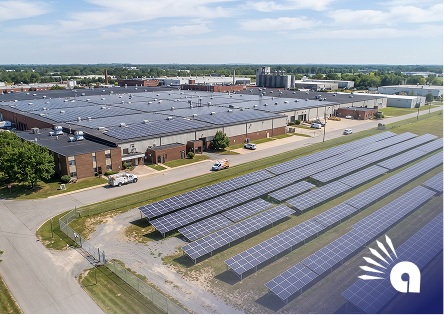
Yes. Soil condition, land levelling, drainage, orientation, and surrounding shadows all need assessment – none of which can be evaluated remotely.

How soon will I get a proposal after the survey?

With Anany Urja, a detailed design and proposal is typically ready within a few working days – based on actual site findings, not standard estimates.

Inquiry Now