📢 The DCR (Domestic Content Requirement) Policy implementation has been extended until 31st December 2026 for the solar sector. 🌞 Claim Up to ₹78,000 Government Subsidy Before 31 March 2027 – Switch to Solar with Anany Urja.     📢 The DCR (Domestic Content Requirement) Policy implementation has been extended until 31st December 2026 for the solar sector. 🌞 Claim Up to ₹78,000 Government Subsidy Before 31 March 2027 – Switch to Solar with Anany Urja.    
Solar for Industrial Expansion: Why Power Planning Should Start Before the New Factory Does

Solar for Industrial Expansion Why Power Planning Should Start Before the New Factory Does-main

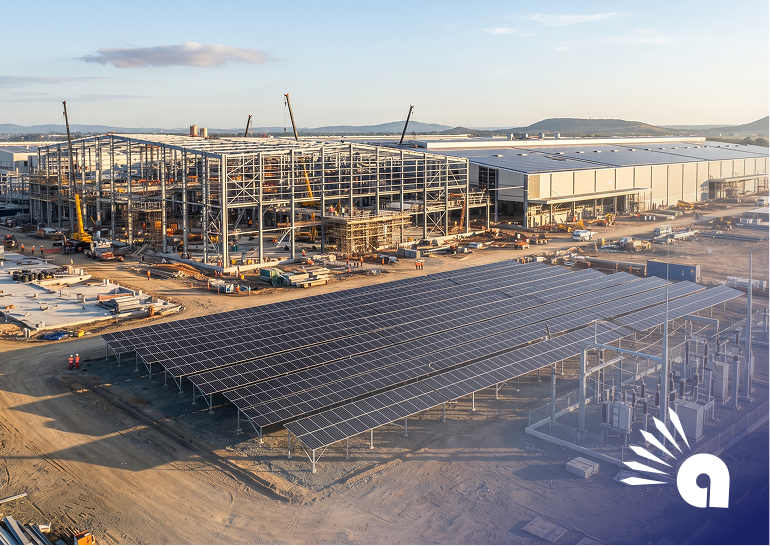
Most factory plans begin with machines, floor area and a construction budget. Power usually joins the conversation late, when walls are going up and the electricity bill is already a line item nobody can change. That order is costly. Electricity is a major recurring expense for many industries, and the best time to shape it is before the first foundation is poured.

Power Is a Design Input, Not a Finishing Touch

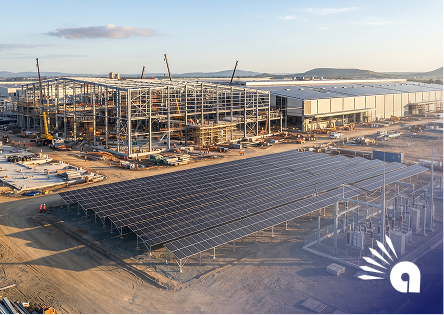
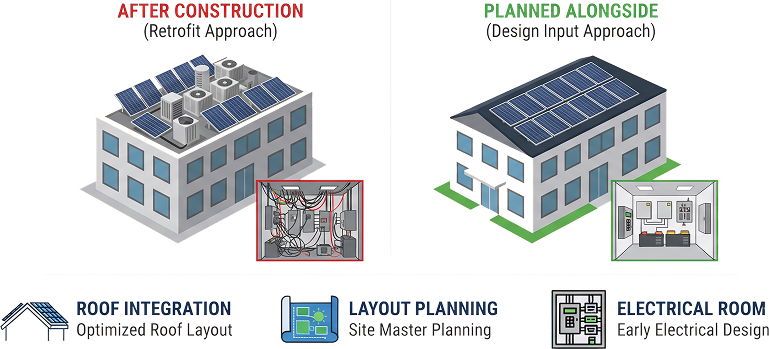
When solar is added after construction, it has to fit around decisions already made. When it is planned alongside the building, the building can fit the solar. That difference shows up in the roof, the layout and the electrical room. Planning early lets you estimate the load honestly, decide how much of it solar should cover and avoid retrofits that cost more than doing it right the first time.

What Gets Missed When Solar Comes Late

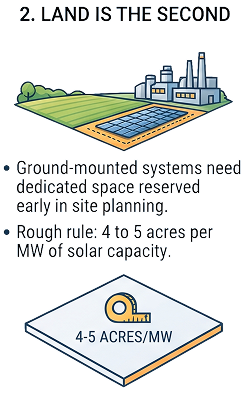
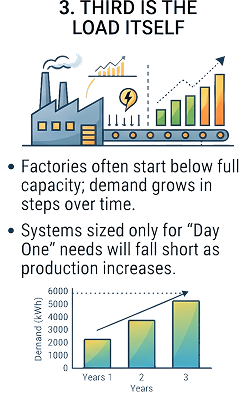
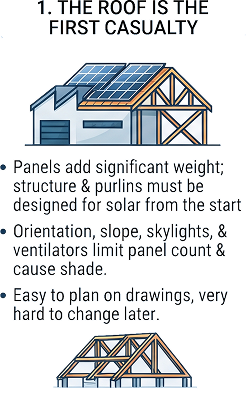
The roof is the first casualty. Panels add weight, so the roof structure and purlins should be designed to carry them from the start. Orientation, slope, skylights and ventilators also decide how many panels fit without shade, and they are easy to place well on a drawing and hard to move later. Land is the second. A plant that needs a ground-mounted system should reserve space early, since a rough rule is four to five acres per MW. Third is the load itself. A factory in its first year often runs below full capacity, so demand tends to grow in steps, and a system sized only for day one can fall short soon after.

land-is-second
third-is-load-itself

Rooftop, Ground-Mounted or Both?

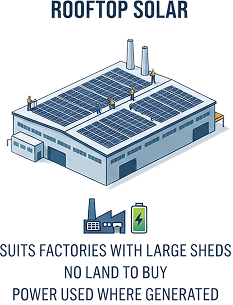
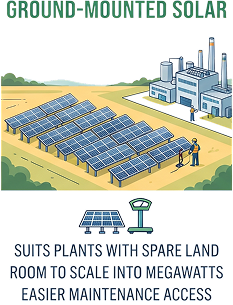
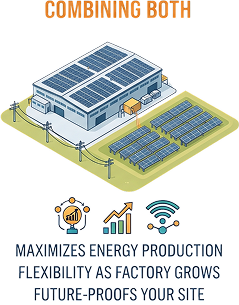
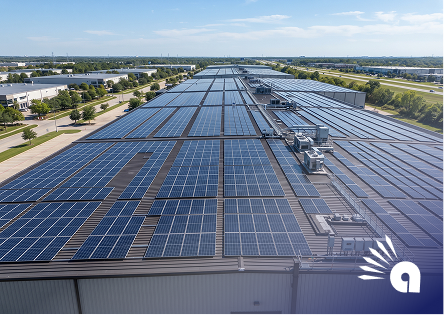
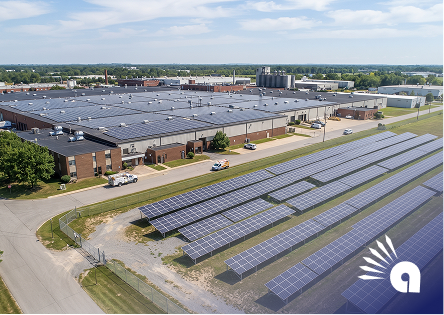
Rooftop solar suits factories with large sheds, since there is no land to buy and the power is used right where it is generated. Ground-mounted solar suits plants with spare land and heavy demand, with room to scale into megawatts and easier maintenance access. Some plants combine both over time. Deciding early which one fits your site, and leaving room for the other, keeps options open as the factory grows.

ground-mounted-solar
combining-both

Timelines Matter More Than Prices

Solar is not an overnight purchase. A site survey and feasibility study, engineering, procurement, approvals and documentation, installation and commissioning all take time, and the paperwork often sets the pace more than the panels do. Start late and you may open the factory on grid power alone, paying full tariffs for months while the solar plant catches up. Start early and the plant can be ready to switch on as production ramps up.

How Anany Urja Plans Power for Industrial Projects

Anany Urja, a trusted solar EPC company in Gujarat, handles this planning as one continuous process. It starts with consultation, a site survey and a feasibility study, then moves into engineering and design by experienced engineers aimed at maximum generation and high safety standards. As an industrial solar installation company, it covers procurement of premium components, government approvals and documentation, installation, testing and commissioning, with financing assistance available. Business customers also get tax benefits and long-term return on investment. Its work spans rooftop systems for industrial facilities and warehouses, ground mount captive solar plants and utility-scale projects, including the 1.8 MW park at Khambhaliya Visavadar and the 5.6 MW park at Katkoi Tilakwada. After commissioning, SOLARMAN Smart monitoring and O&M support keep the plant performing.

Conclusion

A factory’s power plan shapes its costs for decades, so it deserves a seat at the table from day one. Estimate the load, design the roof for solar, reserve land if needed and start approvals early. If you are planning an industrial expansion, speak to the Anany Urja team about a site survey before the first drawings are final.

Frequently Asked Questions

Should solar be planned before building a new factory?

Yes. Early planning lets the roof, layout and land be designed around solar, avoiding costly retrofits.

Does Anany Urja serve industrial clients?

Yes. It handles rooftop systems for industrial facilities, ground mount captive plants and utility-scale projects.

What does Anany Urja's process include?

Consultation, site survey, engineering and design, procurement, installation, testing and commissioning, monitoring and after-sales support.

Does Anany Urja help with approvals and financing?

Yes. It manages government approvals and documentation and offers financing assistance.

Which large projects has Anany Urja executed?

Its solar parks include 1.8 MW at Khambhaliya Visavadar and 5.6 MW at Katkoi Tilakwada, both in Gujarat.

Can I monitor my factory's solar plant remotely?

Yes. SOLARMAN Smart tracks daily generation, monitors performance and detects faults instantly.

Does Anany Urja provide O&M?

Yes. It offers preventive maintenance, performance monitoring, system health checks and technical support.

Inquiry Now